High blood pressure: the silent condition you can measure
Blood pressure is the pressure of blood inside your arteries. High blood pressure, also called hypertension, means that pressure stays too high. Most people with it feel nothing, so the only way to know is to have it measured.
British Heart Foundation; WHO hypertension fact sheet (25 September 2025).
Two numbers, two moments in every heartbeat
A reading such as 130/85 is written as two numbers, measured in millimetres of mercury (mmHg). The top number (systolic) is the higher one: the pressure in your arteries while the heart pumps. The bottom number (diastolic) is the lower one: the pressure while the heart rests between beats.
British Heart Foundation, High blood pressure (systolic and diastolic definitions). Heart drawing: Servier Medical Art, "Heart", CC BY 4.0. Simplified model, not to scale.
Reading explorer
Move the sliders to see how a single clinic reading in an adult under 80 is grouped. This is a learning tool, not a diagnosis: high blood pressure is confirmed from readings on different days, and your own readings should be discussed with your GP or nurse.
WHO hypertension fact sheet (140/90 and/or; diagnosis on two different days; very high usually 180/120 or higher); NHS Cwm Taf Morgannwg UHB, High blood pressure (ideal 90/60 to 120/80; 120/80 to 140/90 could mean at risk; 150/90 if over 80); NHS website (home 135/85).
Symptoms, and when to get help
Usually, nothing at all
High blood pressure does not usually cause symptoms, and many people have it without realising. Rarely it can cause headaches, blurred vision or chest pain.
Very high blood pressure (usually 180/120 or higher) can cause symptoms such as severe headaches, chest pain, dizziness, difficulty breathing, nausea, vision changes, confusion or nosebleeds. Anyone with these symptoms and high blood pressure should get care straight away.
NHS website, High blood pressure (reviewed 19 July 2024); WHO hypertension fact sheet.
Call 999 straight away if someone has:
- sudden chest pain or pressure that does not go away
- pain that spreads to the arm, neck, jaw, stomach or back
- chest pain with sweating, feeling sick, light-headedness or shortness of breath
These can be signs of a heart attack. Do not drive yourself to A&E. For frequent headaches, blurred vision or chest pain that comes and goes, call NHS 111.
Contains public sector information licensed under the Open Government Licence v3.0 (adapted from the NHS website page on high blood pressure).
Who is more likely to have high blood pressure
Things you can change
- A diet high in salt and low in fruit and vegetables
- Being overweight
- Low physical activity
- Smoking
- Drinking too much alcohol
- Long-term stress
Things you cannot change
- Older age
- Close relatives with high blood pressure
- Having diabetes or kidney disease
- A Black African, Black Caribbean or South Asian background
NHS website, High blood pressure causes (reviewed 19 July 2024); WHO hypertension fact sheet; Blood Pressure UK, Causes of high blood pressure.
Where the salt hides
Adults in the UK should have no more than 6 g of salt a day, about one teaspoon. The WHO advises less than 2 g of sodium a day, which is 5 g of salt. Labels sometimes give sodium instead of salt: salt = sodium × 2.5.
Seasonings and dried products
Foods
Grams of salt per 100 g of food, calculated as sodium × 2.5 from ten national and regional food composition tables (listed in Sources). Cooked foods are boiled without salt unless stated. Items marked "home recipe" are calculated from a standard recipe in the Bangladesh table. Items marked "salt added" were cooked with salt in the Caribbean table (0.6 g per 100 g of raw food; 1.6 g for fried plantain). Per 100 g, not per portion: seasonings are used in small amounts, but they are very concentrated. Values for the same kind of food differ between tables because of recipes, ingredients and methods.
Food Standards Scotland, Salt (6 g limit; sodium × 2.5; high, medium and low per 100 g); WHO hypertension fact sheet (sodium under 2 g a day).
What untreated high blood pressure can lead to
Over time, high blood pressure strains the blood vessels, heart, brain, kidneys and eyes. Arteries can lose their stretch and become stiff or narrow.
Heart disease and heart attack
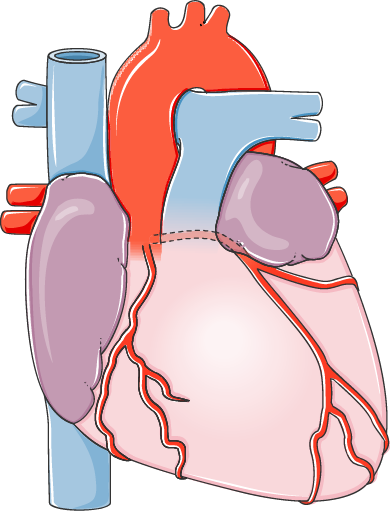
Raised risk of angina, heart attack, heart failure and irregular heartbeat.
Stroke and vascular dementia
High blood pressure can burst or block arteries that supply the brain, causing a stroke. It also raises the risk of vascular dementia.
Kidney disease
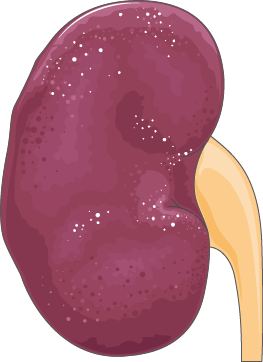
Damage to the kidneys can progress to kidney failure. See the kidney health guide.
WHO hypertension fact sheet; NHS website, High blood pressure; British Heart Foundation (arteries becoming stiff or narrow). Brain drawing is original and simplified.
Ways to lower blood pressure
What the WHO recommends
- Eat less salt (sodium under 2 g a day)
- Eat more vegetables and fruit
- Be active: at least 150 minutes of moderate activity a week
- Keep alcohol low, and do not use tobacco
- Lose weight if you are overweight
- If you are prescribed medicines, take them as directed and keep your appointments
WHO hypertension fact sheet.
Cooking with less salt
The foods you grew up with can stay. In the food tables above, plain staples are very low in salt; the salty items are seasonings and processed or preserved foods.
- Check labels and choose lower-salt versions where you can
- Use fewer stock cubes and less added salt
Low in salt when cooked without salt: WAFCT 2019 and McCance and Widdowson (2021).